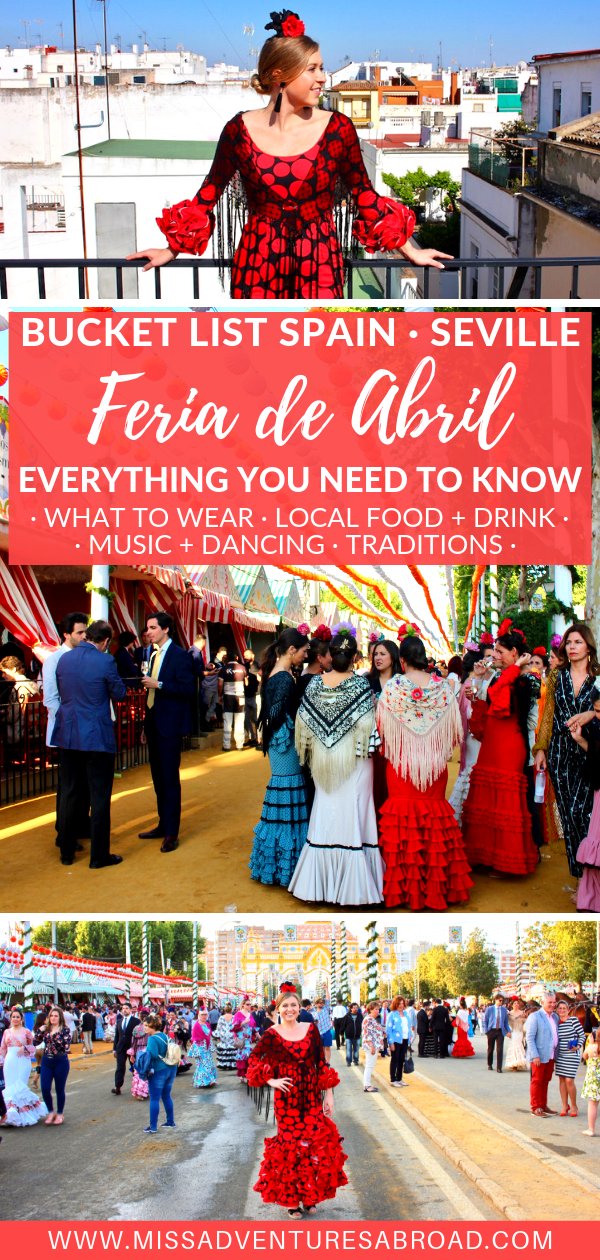
The Complete Guide to Seville’s Feria de Abril
If there is one thing I have learned after two years teaching English in Spain, it is that the Spanish take their local festivals and traditions extremely seriously. Whether you are running with the bulls in Pamplona, reveling at Carnevale in Cadiz, marveling at the fireworks at Valencia‘s Falles, or admiring the flowers at Cordoba’s Festival of the Patios, you’ll witness entire cities thrust into full-on festival mode to honor and celebrate age-old traditions.

The Feria de Abril in Seville is no different! Each year, precisely two weeks after the end of Holy Week (Semana Santa), the capital of Andalucia springs to life, and the festive atmosphere which saturates the city is impossible to ignore. History, culture, tradition, revelry, and Andalucian pride blend together to create a unique atmosphere and experience that is famous throughout Spain, and which visitors are unlikely to forget.
That being said, there is a certain air of exclusivity to the festival, which can make the Feria de Abril seem somewhat inaccessible to outsiders. To help you have an amazing time, I’ve put together this ultimate guide to the Feria de Abril. Keep reading to find out more about the festival’s history, discover how to dress the part, immerse yourself in local traditions, and learn my best tips for navigating and enjoying this festival as a foreigner!
History of the Feria de Abril 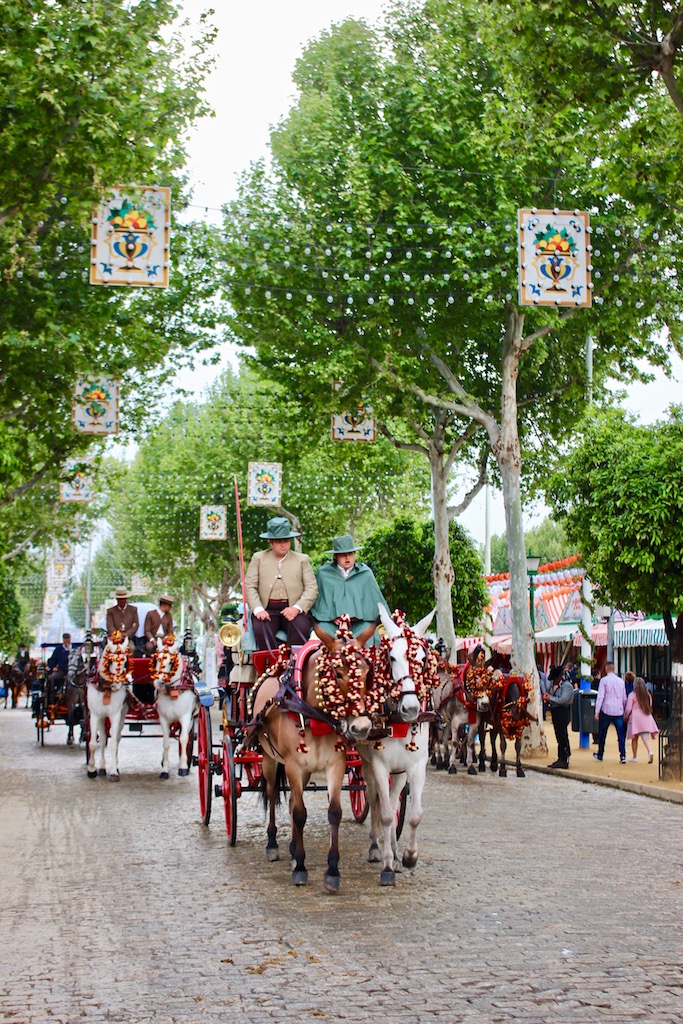
Seville‘s Feria de Abril dates back to 1846, and, believe it or not, this now iconic festival began as a livestock fair! The following year, the first 3 casetas (booths/tents) were erected by wealthy locals to celebrate the occasion. As the years passed more and more traditions, casetas, and fanfare surrounded the event, until it evolved from a livestock fair to the week-long event it is today!
The Feria de Abril today
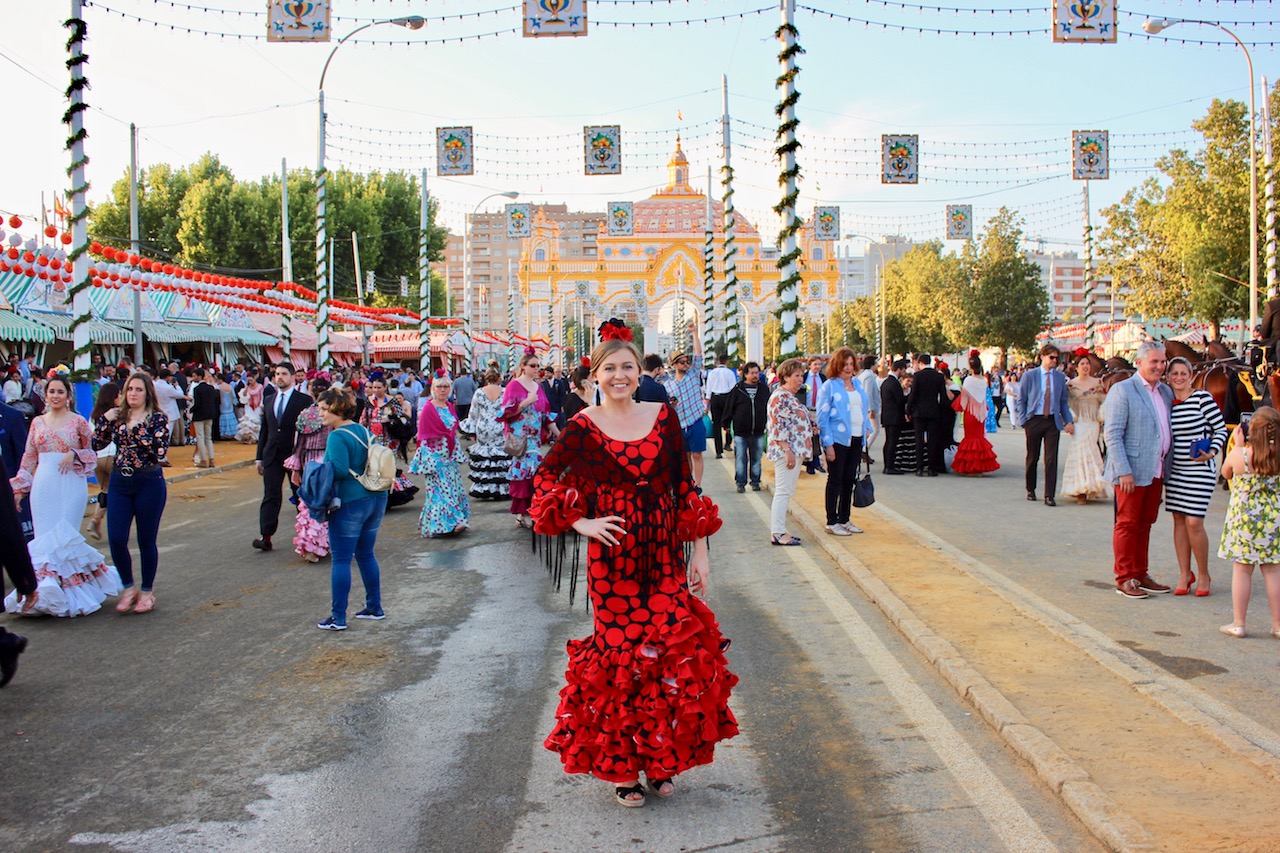
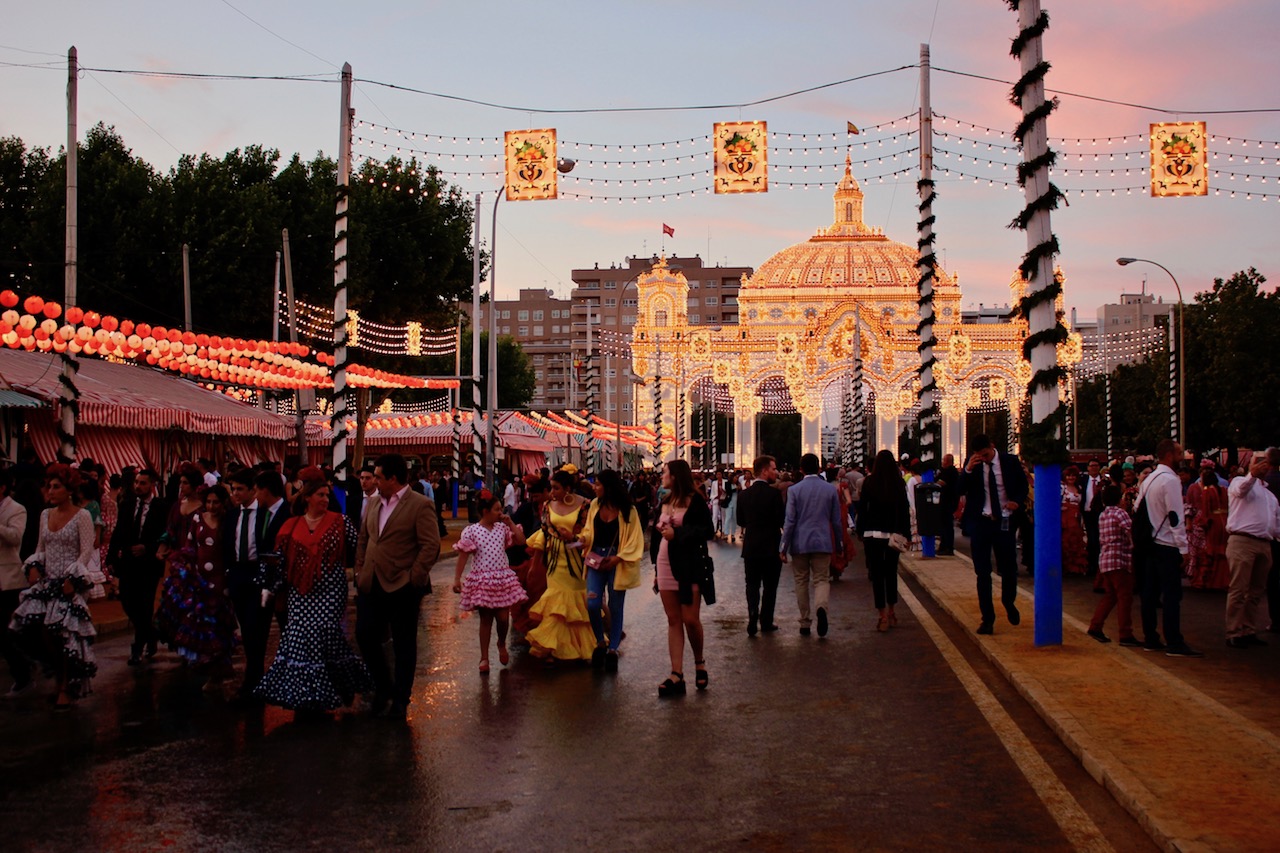
Today, the Feria de Abril is one of Andalucia‘s most well-known festivals, with over 5,000,000 attendees coming from near and far to participate in the fanfare. The week is a time to eat, drink, dance, and be merry, all while honoring the traditions of bygone days. The fairground itself is located at the real de la Feria near the Parque de los Príncipes, and covers an area of 75,000 square meters. During the Feria, this area is transformed into orderly streets which are lined with over 1,000 colorful casetas.
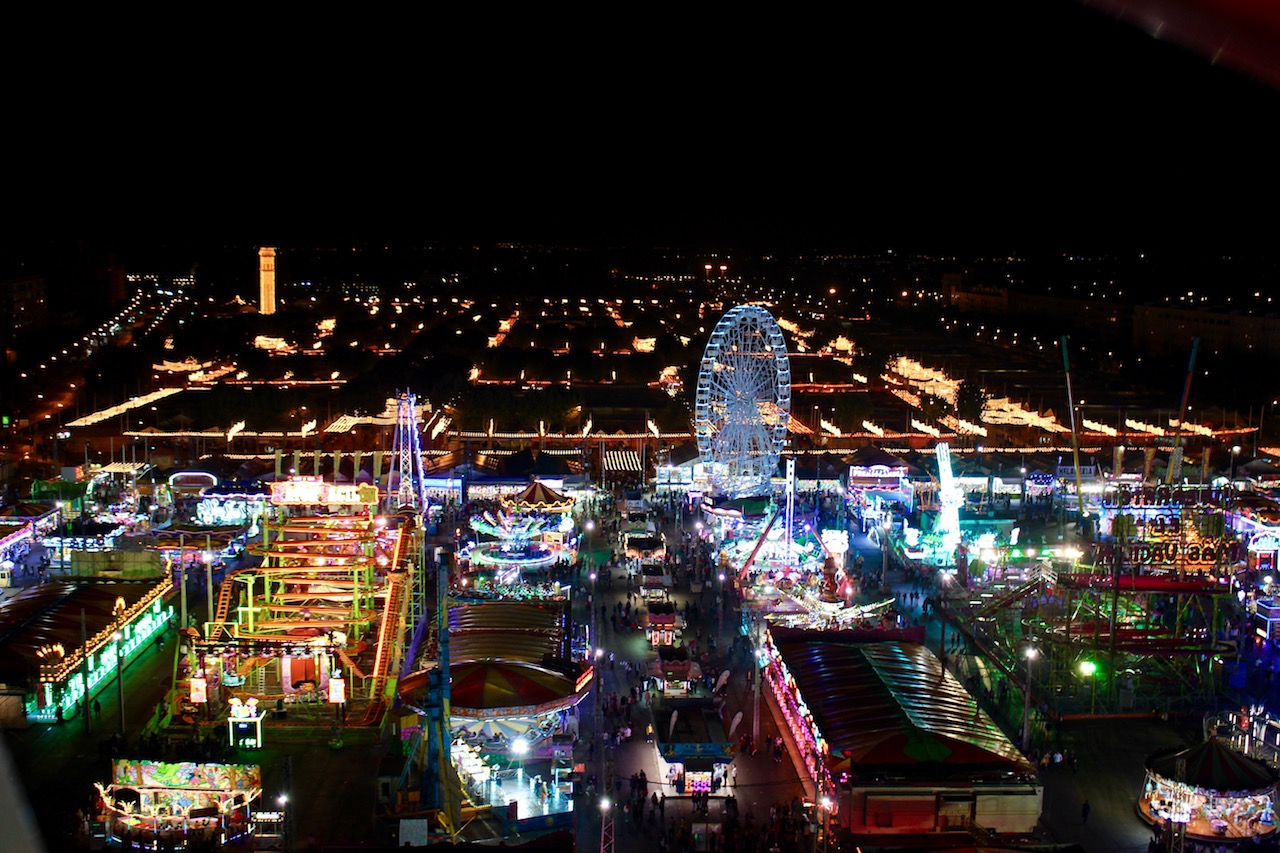
There is also a section of the fair called Calle Infierno which is devoted to amusement-park type fair rides, games, and food. Much of the city is shut down during the Feria, and you’ll find reduced hours at shops, places of business, and even the banks during this festive time. The school that I teach English at is located close to the fairgrounds, and I had the entire week off! One thing is certain, to locals, the Feria de Abril is the event of the year!
When is the Feria de Abril?
The dates of the Feria de Abril are entirely dependent on the religious calendar. The Feria de Abril is held two weeks after Semana Santa (Holy Week) and runs from midnight on Saturday until midnight the following Saturday. (While Feria has typically run from Saturday-Saturday the past few years, this has been subject to change!) This past year, the Feria de Abril was actually held in May, as Semana Santa fell later in the year. As the dates vary from year to year, if you are planning a visit, be sure to double check the official dates in advance! You’ll find that the casetas and fairground are open through the wee hours of the morning, as locals celebrate through the night.
Special Events:
Alumbrado
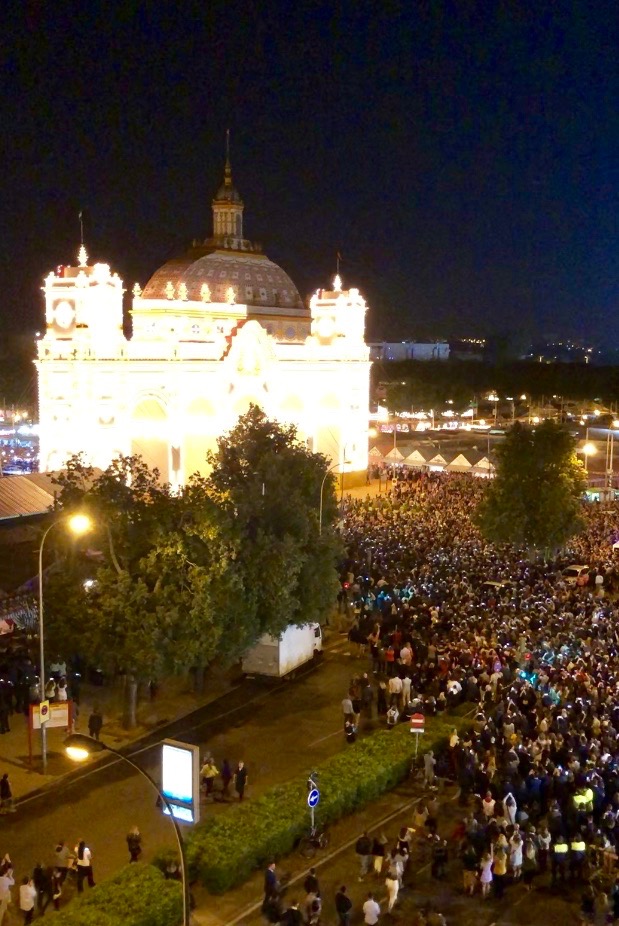
Check out my Alumbrado video on my Instagram highlights @missadventuresabroad! Here you can see that the portada is almost completely lit!
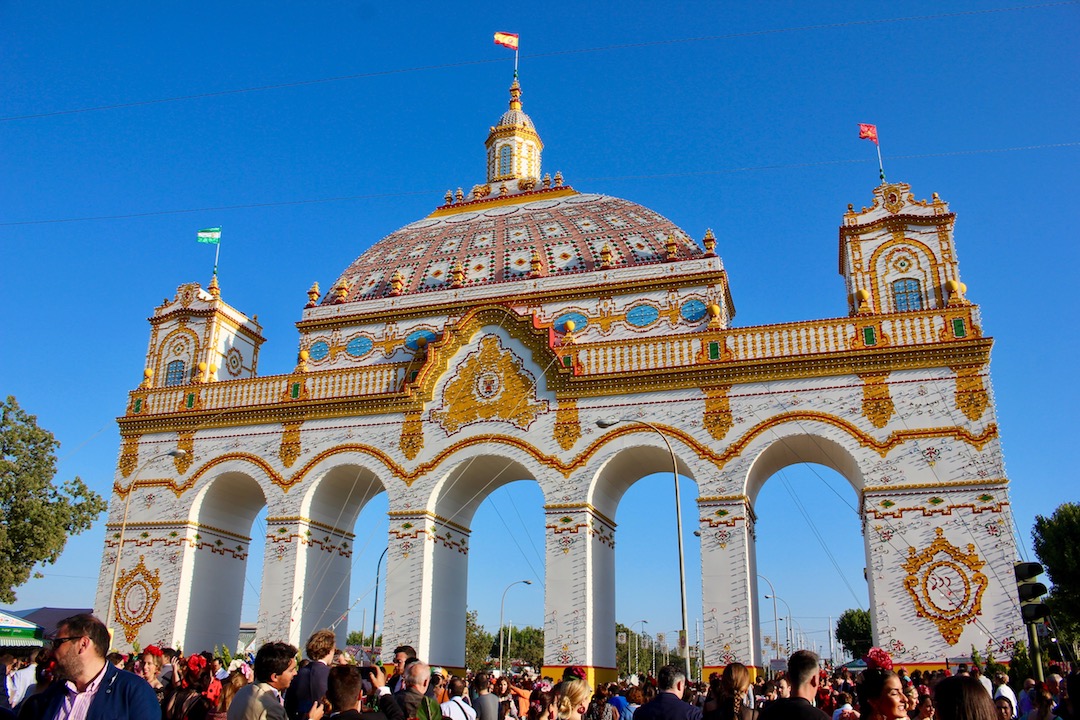
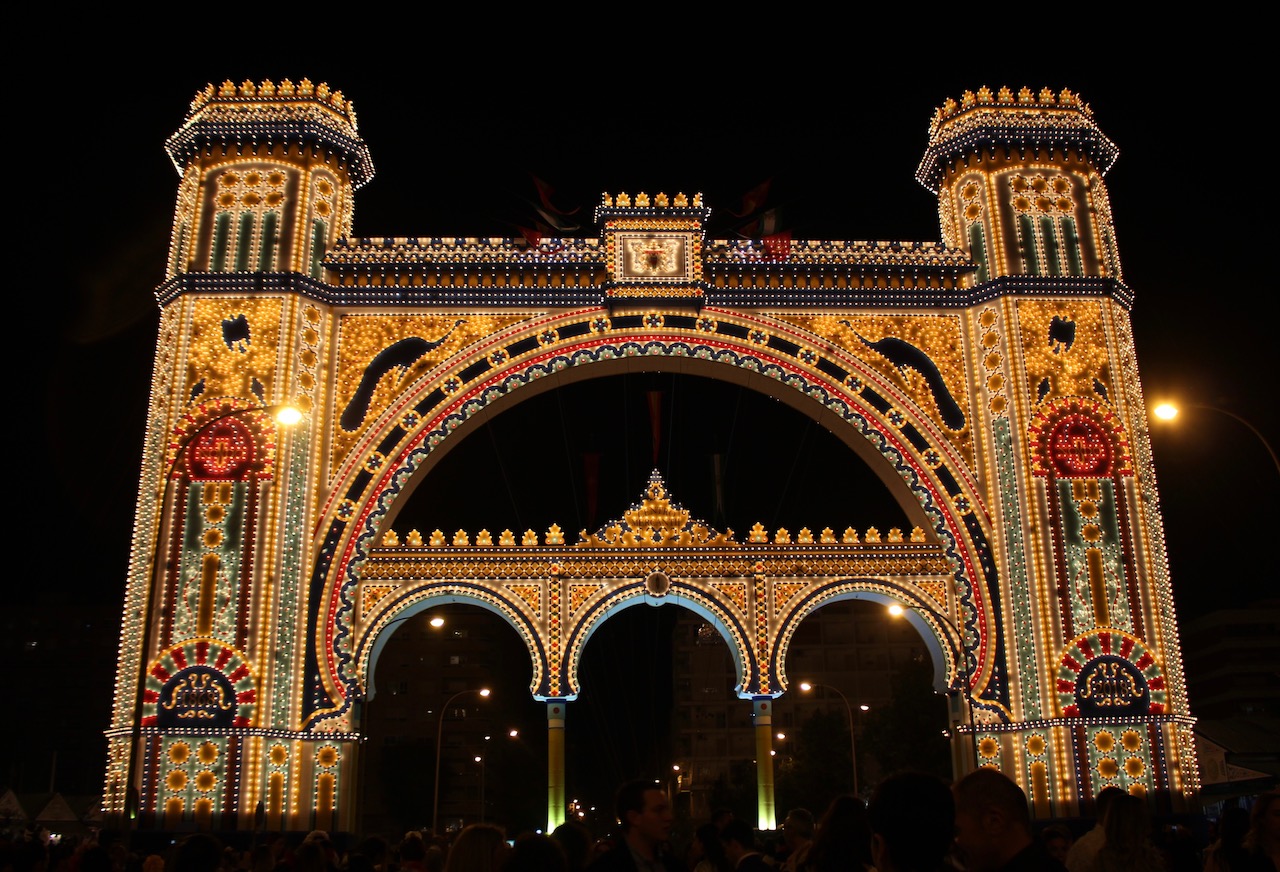
The Alumbrado occurs at midnight the first night of the fair and officially kicks off the Feria de Abril. Onlookers gather at the portada (the gateway to the fair) and wait for the lights to switch on, promptly at midnight. Each year there is a different design for the portada, so witnessing the Alumbrado is quite exciting!
Pescaíto
La noche del pescaíto (night of the fish) is the traditional start to the Feria de Abril in which people typically eat fried fish to celebrate the first night of the fair.
Bullfights
Bullfights are held every day of the Feria at the Seville bullring. Personally, I opt out of bullfights, as they are too brutal for my liking!
Fireworks
On the final evening of the Feria, fireworks light up the sky at midnight, signaling the end of the week-long celebrations.
What to Wear
Now that you know when and where the Feria is, it’s time to decide what to wear to the festival! For this you have 3 options:
- Casual-Fine if you just want to casually walk around the fair for a bit, take photos, or plan on mostly exploring the casual games portion of the fairgrounds. I still wouldn’t wear a totally casual outfit though, you’ll definitely stand out as many people dress up.
- Dress up-You will want to dress up if you would like to venture inside any of the casetas. Men should expect to wear suits, while women can wear dresses and/or nice skirts. This is the best option if you are only attending the fair for a day or so or don’t want to spend money on a traditional dress, while still blending in with the crowd. Even locals don’t always go in traditional dress!
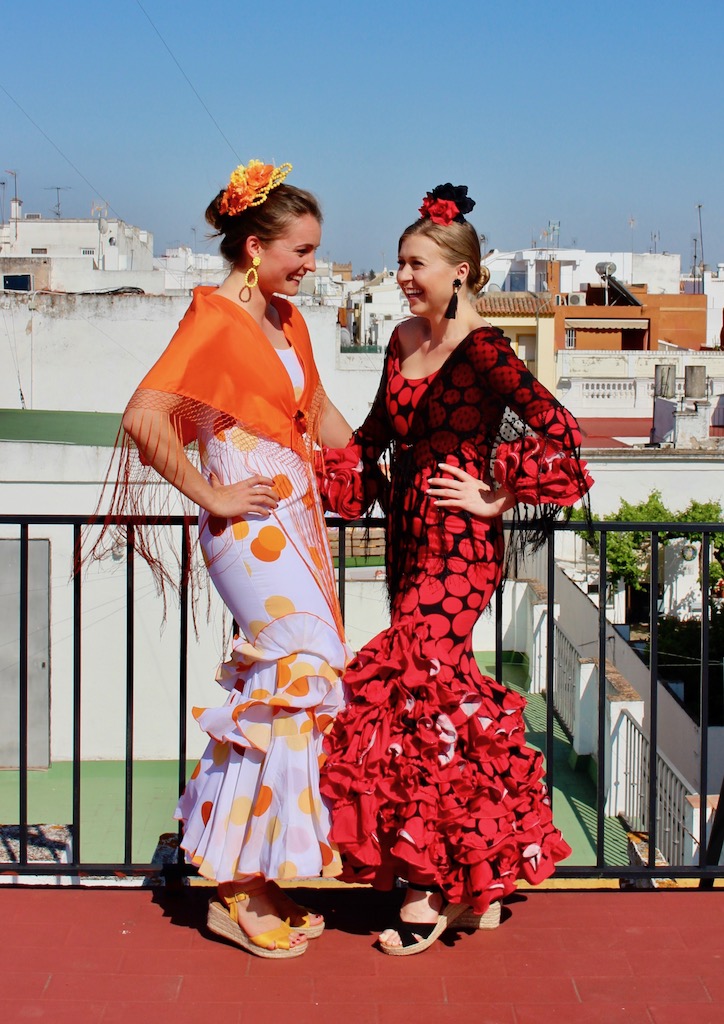
- Traditional– If you are spending an extended period of time in Spain, looking for a fun Instagram, want to embrace Sevillana culture, or don’t have a tight budget, then why not go traditional? I purchased a traditional dress for my second Feria and had a blast! It was fun blending into the sea of colorful dresses, and I love having photographs which really commemorate my two years living in Spain.
Traditional Dress

Traditionally, men wear what is called a traje corto, while women wear a traje de flamenca.
Traditional wear for men (Traje corto):
- short jacket
- tight, high waisted trousers
- boots
- cordobes hat
This outfit is typically seen on men arriving on horseback or driving carriages.
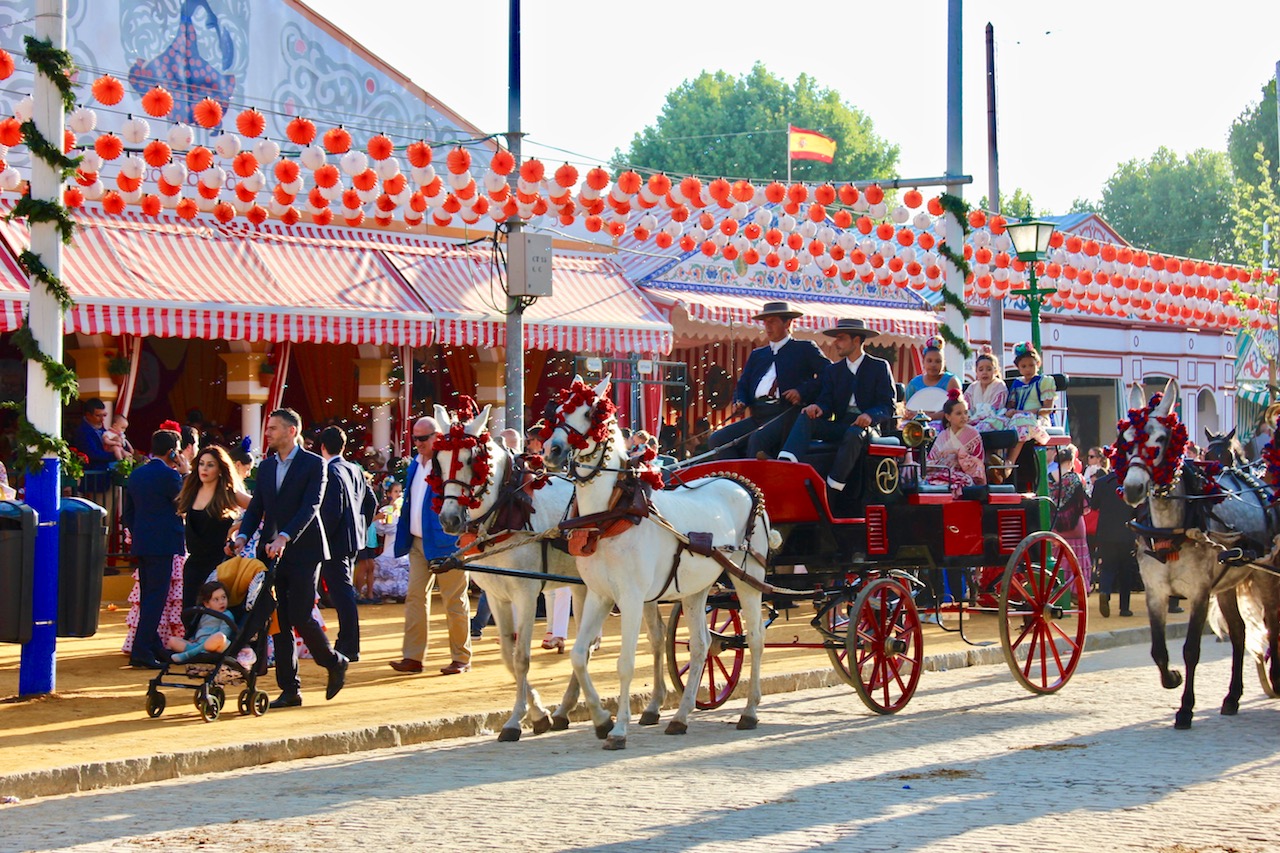
Note: I would say most men attend the fair in a suit, so if you are a man planning on visiting, I think a suit is the best option for you to wear, as even most local men choose a suit over the traje corto!
Traditional wear for women (Traje de Flamenca):
- Flamenco style dress
- Mantilla shawl
- Brooch
- Fan
- Earrings, necklace, bracelet
- Flower hairpiece
- High heels (ideally comfortable!)
Purchasing a traditional Traje de Flamenca
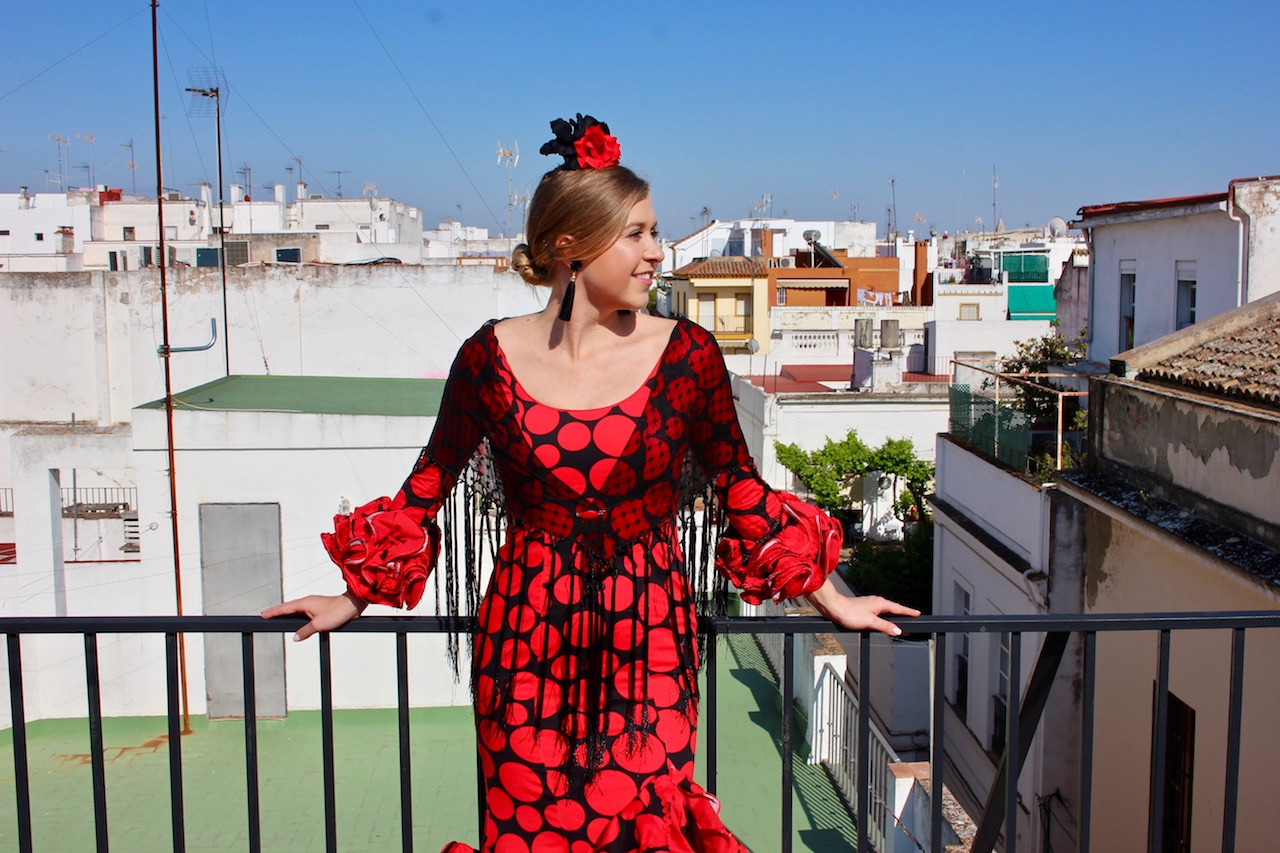
Purchasing a new dress
Trajes de Flamenca typically cost €150 at the low end up to €1,000 for a custom or designer dress, and that doesn’t even include accessories! I’d say the average price for a decent dress and accessories is between €250-€400, which isn’t cheap if you are just in town for a visit! Additionally, many dresses need to be tailored to fit, so if you are just visiting, there may not be time for you to get a custom or tailored dress. If you do have time to shop and would like to purchase a new dress, there are several Flamenco shops throughout Sevilla, and you can even find them in El Corte Ingles department store in the weeks leading up to Feria. Dress styles change from year to year, with certain styles coming in and out of fashion. A new dress is great if you want to be a Feria fashionista!
Budget Options
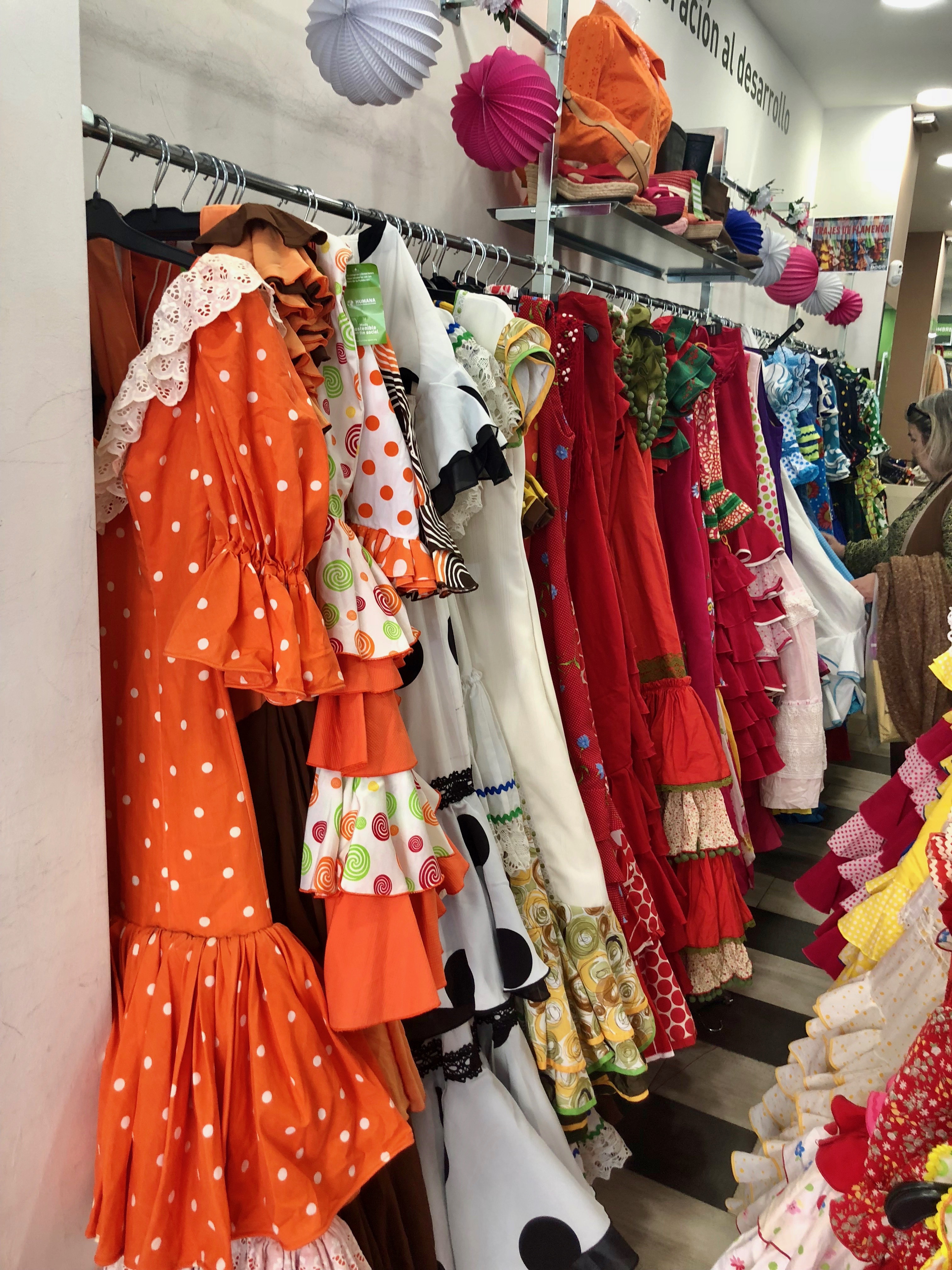
- Second-Hand Shops-If you are living in Seville or have a chunk of time there, then a second-hand dress is a great way to save money and still dress the part! While second-hand dresses are typically older styles that aren’t as in fashion, they are a fraction of the price, typically costing between €25-€85. I purchased my dress from one of the Humana stores in Seville for €65, while my friend paid around €30 at a used dress fair for her dress and accessories! Keep an eye out for Flamenca dress sales about 2-3 months before the fair! Dresses were sold out from Humana completely in the two weeks leading up to Feria.
- Rentals-This option is best for travelers, as you probably won’t have time to find a dress second-hand mere days before the fair. You can rent a dress starting from €100 on this website.
- Online forums-I used Facebook to rent out my dress to a fellow English teacher on the days I wasn’t attending the fair! It may be worth it to check out local Expat or traveler Facebook groups. There is also a Spanish website called Milanuncios, which is essentially the Craigslist of Spain.
- Friends-Many of my friends were able to borrow Flamenco dresses from various colleagues or friends they had made during their tenure in Seville. If you happen to have a network in Spain, it doesn’t hurt to ask if anyone has a spare dress lying around!
All dressed up, now where to go? Finding a caseta!
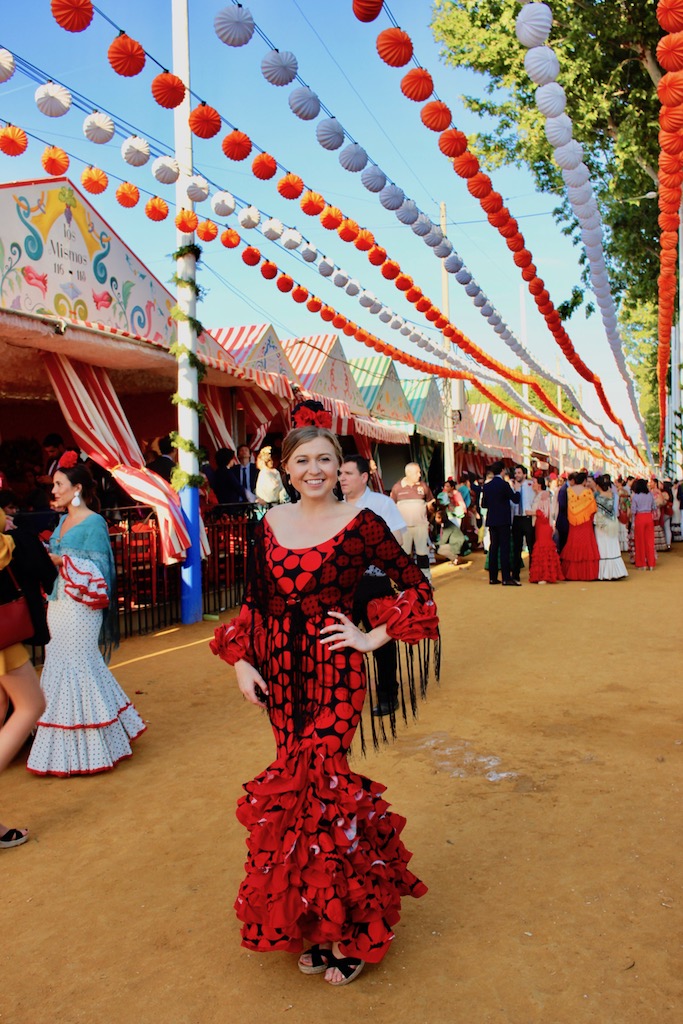
Now that you’re dressed for the Feria, it’s time to party! These colorful tent-like structures are where most of the Feria action takes place! Inside the walls of a caseta (both private and public) you’ll find food, drink, music, and dancing. While there are over 1,000 casetas to be found within the fairgrounds, most of these are private and only open to members.
Public Casetas
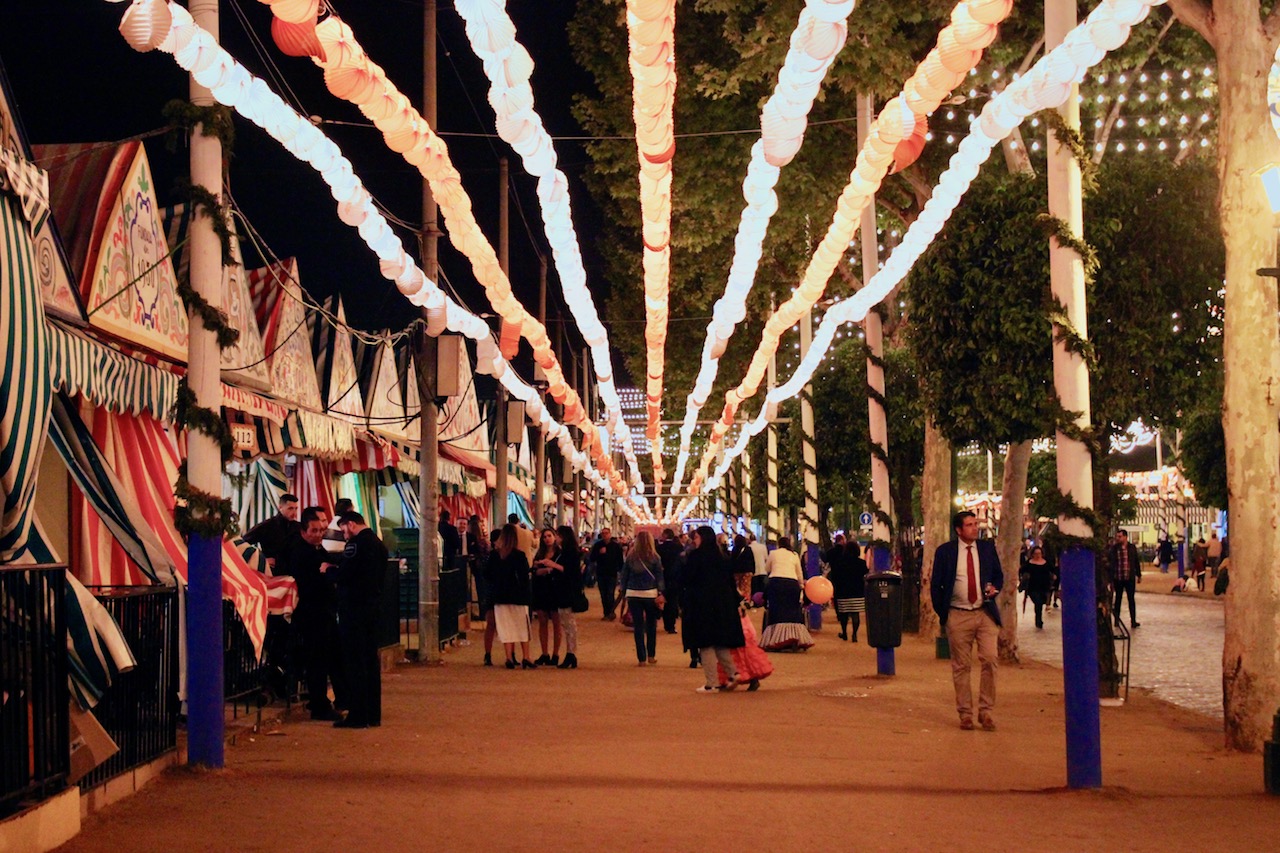
For many foreigners, the Feria can feel quite exclusive thanks to the private nature of most casetas. That being said, there are a few public casetas to be found if you know where to look! Each year, a map of the fairgrounds is released, which shows where to find casetas according to their number and the street you will find them on.
The fairgrounds are quite large, so to avoid aimlessly walking around in a frustrating search for the rare caseta publico, be sure to use a map to navigate! You can find a list of the 15 public casetas here.
Private Casetas
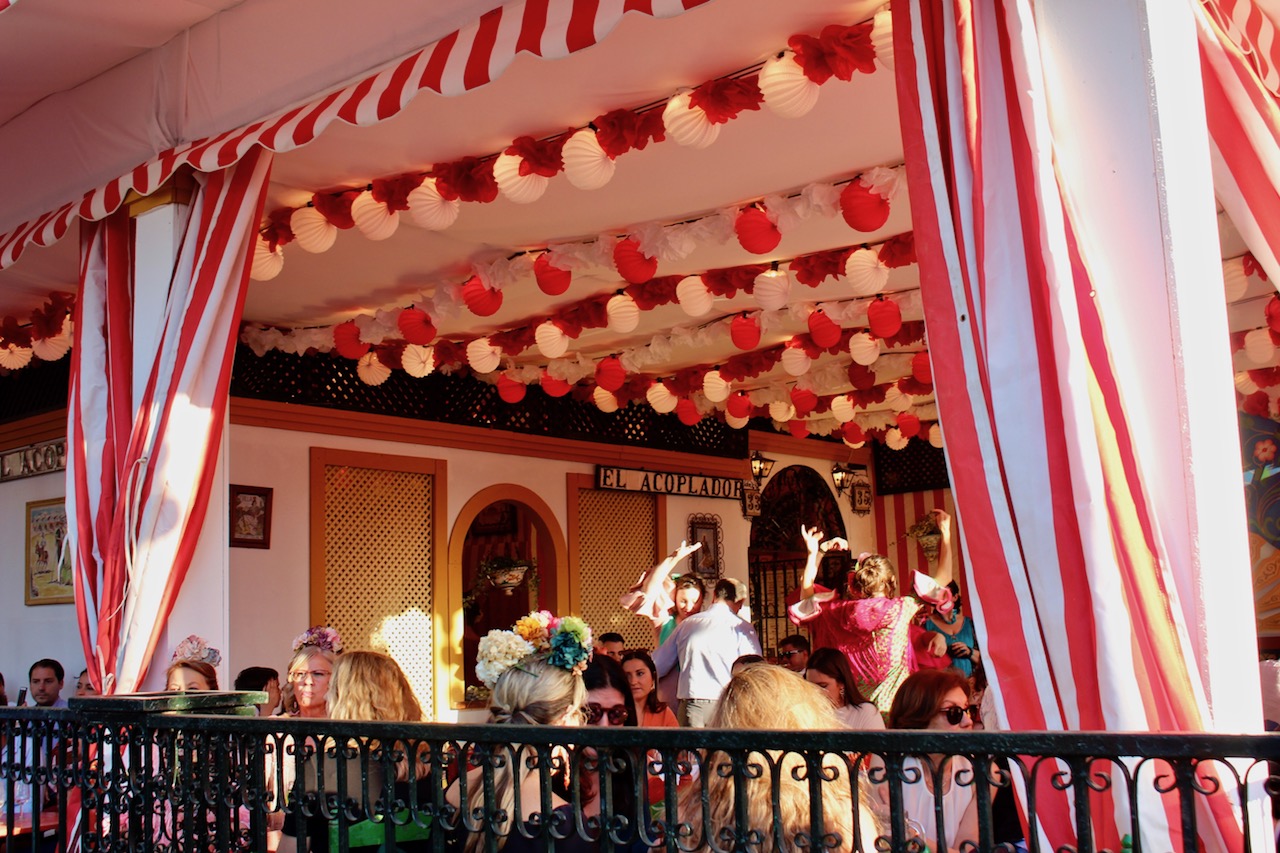
If you happen to have connections in Seville, now is the time to break out those networking skills! If you have been invited to a friend’s caseta, be sure to follow proper caseta etiquette-wear proper attire (dress up), don’t drink too much, and don’t bring too many guests with you.
Food & Drink
Attending the Feria de Abril is a great opportunity to try some local food and drink! You can order raciones (portions meant to be shared of typical dishes) inside of the casetas, or head to the more modern food stalls on the amusement fair side of the festival-Calle Infierno. Be sure to have plenty of cash on hand! Some examples of typical dishes are fried seafood (particularly enjoyed during the Pescaíto), jamon Iberico (Iberian ham), churros con chocolate, to name just a few!
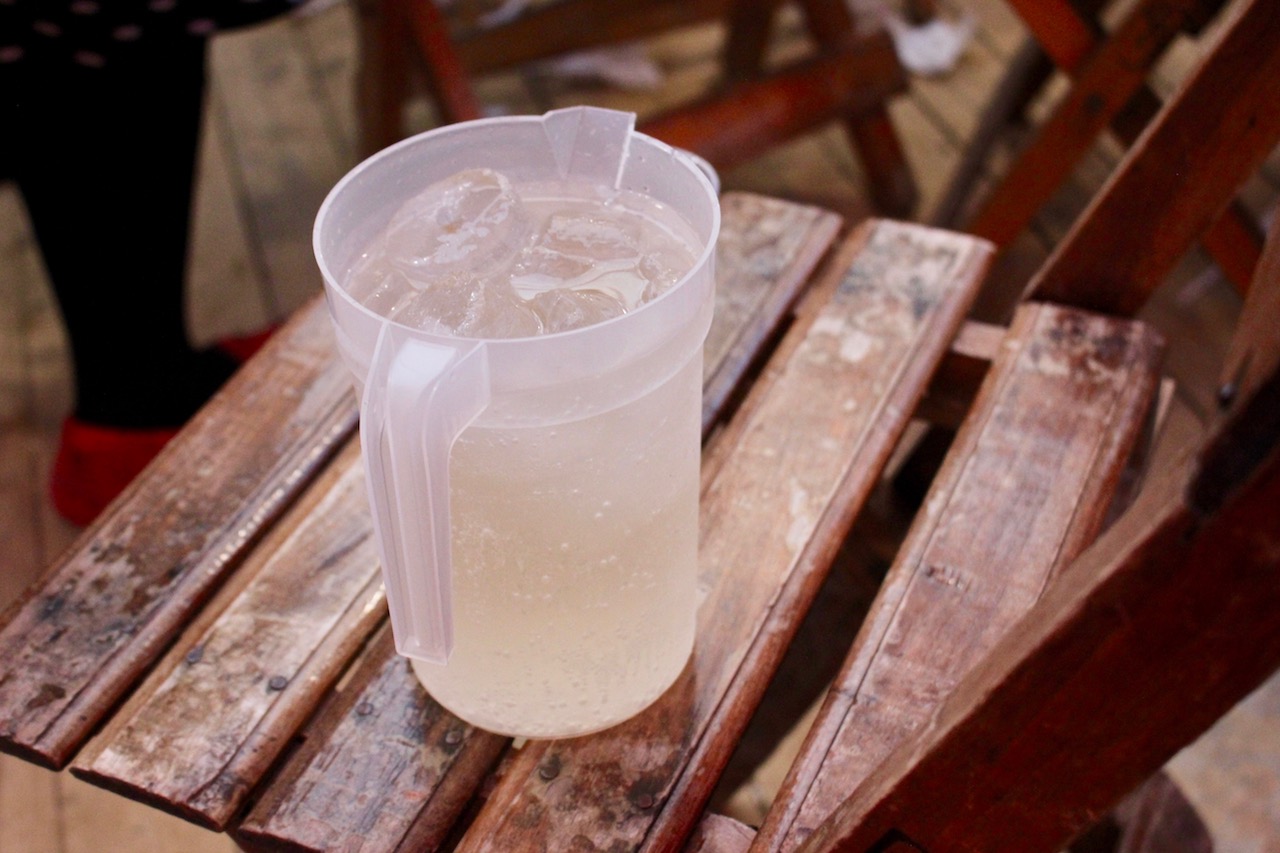
The drink of choice during the Feria de Abril is called a rebujito. A rebujito is part local manzanilla sherry, part 7-Up or Sprite, and is served on ice. Grab a jarra to share with friends, but be sure to sip-it’s stronger than you’d think!
Music & Dancing
You’ll hear a range of different styles of music from popular music to traditional tunes. The style of music and dancing often varies from caseta to caseta, and also changes depending on the time of day. However, no matter where you go one thing is certain, you are bound to encounter sevillanas!
These traditional folk dances are typical to Seville, and locals all seem to know the moves! If you’d like to learn how to dance a sevillana before the Feria, consider heading to a dance studio or even finding a tutorial or watching a video like this one on Youtube! I must admit, I don’t have any of the dance moves down (I’m more of a Salsa girl!), but I think I’ve mastered the clapping!
Other Ferias in Andalucia
While the Feria de Abril in Seville is widely considered to be the most popular fair in Andalucia, it certainly isn’t the only one! In fact, the Seville Feria is one of many fairs which take place during the spring and summer months in the South of Spain. If for some reason you can’t attend the Feria de Abril in Seville, but want to experience this traditional Spanish festival, consider heading to other Andalucian cities such as Cordoba, Granada, or Jerez de la Frontera, to name a few. You can find more information on other Feria locations and dates here.

One thing is certain, whether you wear a traditional dress or not, visit the Feria de Abril for 1 day or 7, or try your hand at a sevillana, witnessing the Feria in action truly is an incredible glimpse into Andalucian culture!
Will you be attending the Feria de Abril in Seville? What do you plan on wearing?
You might also enjoy these Spain posts:
- 15 Things You Absolutely Must Do In Seville, Spain
- Tapas, Taverns & History Tour With Devour Seville
- Itálica Day Trip: Roman Ruins (and GOT Location!) Near Seville
- Must Do Madrid: The Top 10 Things To Do In Spain’s Capital
- 3 Perfect Days in Barcelona: The Ultimate Itinerary
Pin this post for later!