How to Spend 1 Day in Mérida: Exploring Extremadura’s Roman Ruins
Calling all Roman history nerds! If you happen to be spending some time traveling through Spain and are looking to discover some of the country’s Roman roots, then you will definitely want to consider paying a visit to Mérida, the capital of Extremadura.
If you are new to this blog, I should probably start off by saying that I am totally obsessed with ancient art and architecture. After all, I studied art history in University, lived in Italy for a year, and have seen Roman ruins in 4 countries (and counting!).
Naturally, when I moved to Spain, I was determined to see some of the country’s best Roman ruins. I started this quest with a quick visit to the Italica ruins just outside of Seville (where I am currently living). This visit totally inspired me to take a day trip to the UNESCO World Heritage Site of Mérida, which is known to be the home of Spain’s most impressive and extensive Roman ruins.
Warning: you may feel as if you’ve stepped back in time…all the way back to 25 BC when Mérida was first founded!
Getting to Mérida
Mérida is an easy day trip from Seville (just 2 hours), and is located about 3 hours outside of Madrid by car. All of the important sites in the city are within walking distance and are quite easy to visit in just 1 day.
That being said, if you are hoping to see more in Extremadura while in town, then I would highly recommend renting a car and combining your trip with visits to Cáceres (a medieval town and UNESCO Heritage Site), Trujillo, Badajos, or Guadalupe (the home of a Monastery I am simply dying to visit).
Planning Your Route
As you can see from this map, the Roman ruins in Mérida are spread out all over town, which means you will be doing a fair bit of walking (my friend and I clocked in at about 22,000 steps!). Fortunately, even the most spread out sites are no more than a 20-minute walk from each other, meaning you can plan your itinerary as you see fit. When I visited, the weather was quite foggy and wet in the morning, so my friend and I opted to see the museum and ruins further outside the center first, and tried to save the trip highlights for later in the day when the fog finally cleared up.
Tickets

The easiest way to see most of the major sites in Mérida is by purchasing a combined ticket. The combined ticket costs €15 (reduced prices are available for students) and allows you access to the:
- Theater and Amphitheater
- Alcazaba
- Morería archaeological zone
- Crypt of Santa Eulalia
- Roman Circus
- House of Mitreo and Columbarium
I highly recommend purchasing the combined ticket, as you can access pretty much every site in Mérida for just a few euros extra. Just be sure to keep it with you as you walk around!
Must See Sites In Mérida
1. Roman Theater
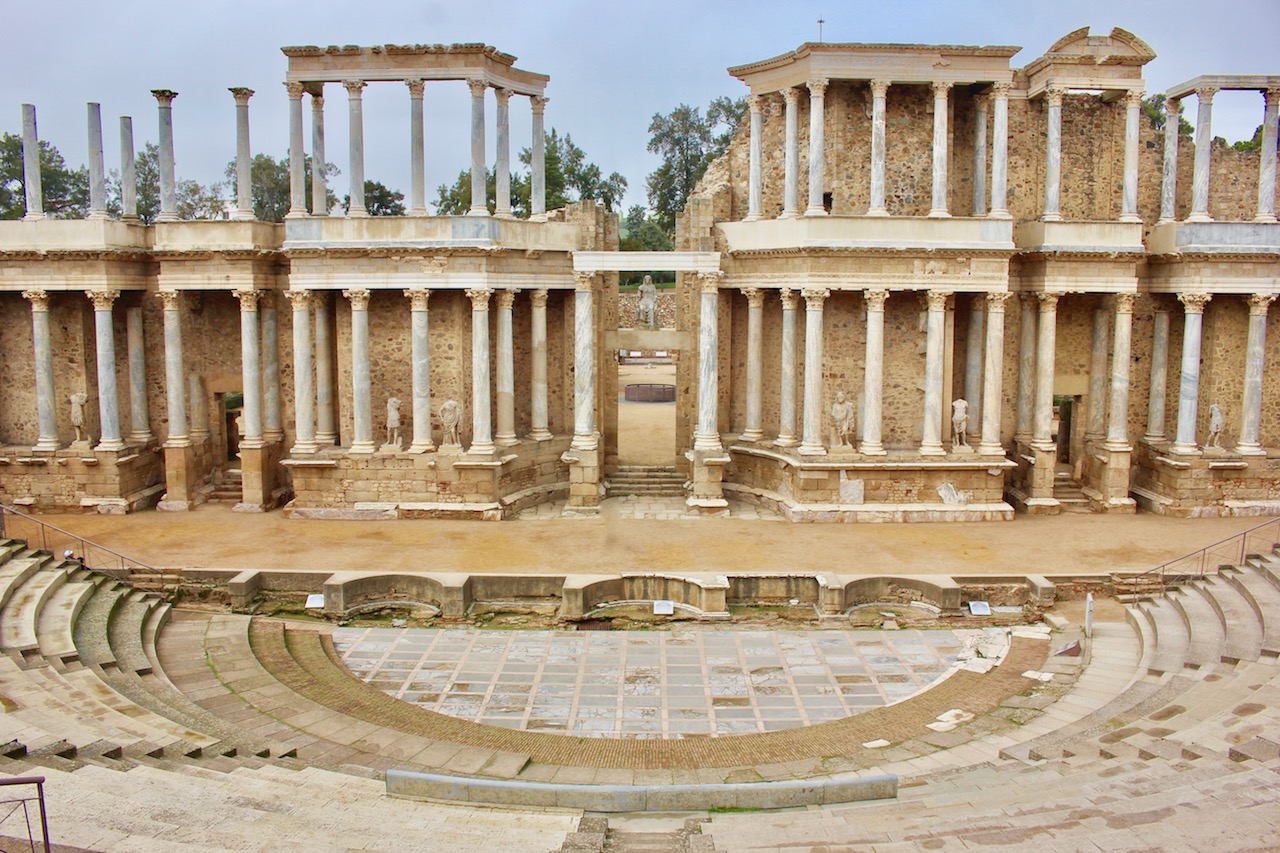
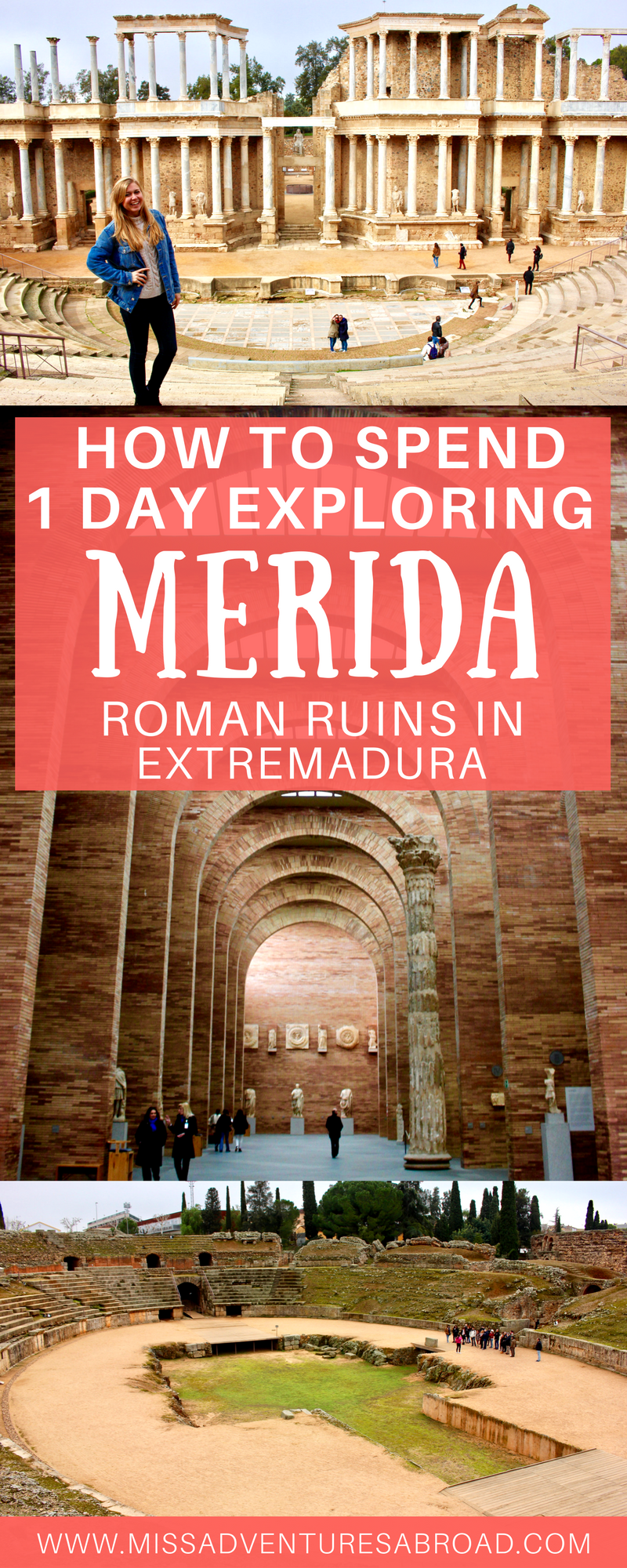
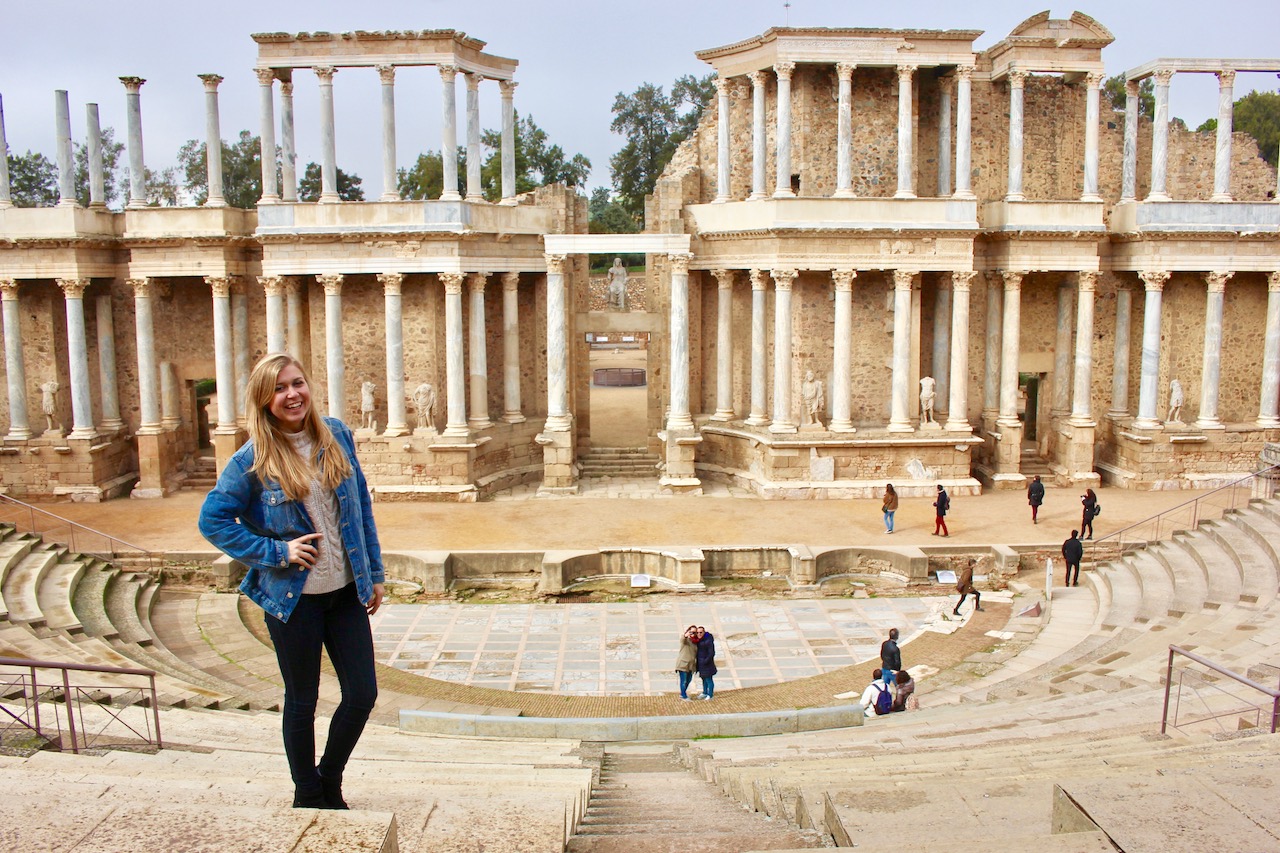
Constructed between 16 and 15 BC, the Roman Theater of Mérida was my favorite site that I saw during my visit and is the most visited tourist site inMérida. This impressive ancient structure was designed to hold 6,000 theatergoers. While I have seen several Roman theaters before, the theater of Mérida is by far my favorite, thanks to the scaenae frons, or the columned section of the theater that served as a backdrop for theatrical events. The marble is exquisite, and I have yet to visit a theater with this feature remaining intact. Today, it is possible to view performances in this theater, and there are even night tours available if you would like to see the zone all lit up in the evening.
2. Roman Amphitheater

The Amphitheater of Mérida was constructed in 8 BC and could accommodate up to 15,000 spectators. While the theater next door would have been used for performances, the amphitheater was meant to provide a space for more violent entertainment, such as gladiator battles.
While I enjoyed walking around the amphitheater, I must admit that I found the amphitheater at Italica to be a bit more impressive (it was featured in a Game of Thrones episode, after all), and I won’t even begin to compare it to Rome‘s Colosseum. I guess I’ve been a little spoiled in the Roman ruins department 😉 .
3. National Museum of Roman Art
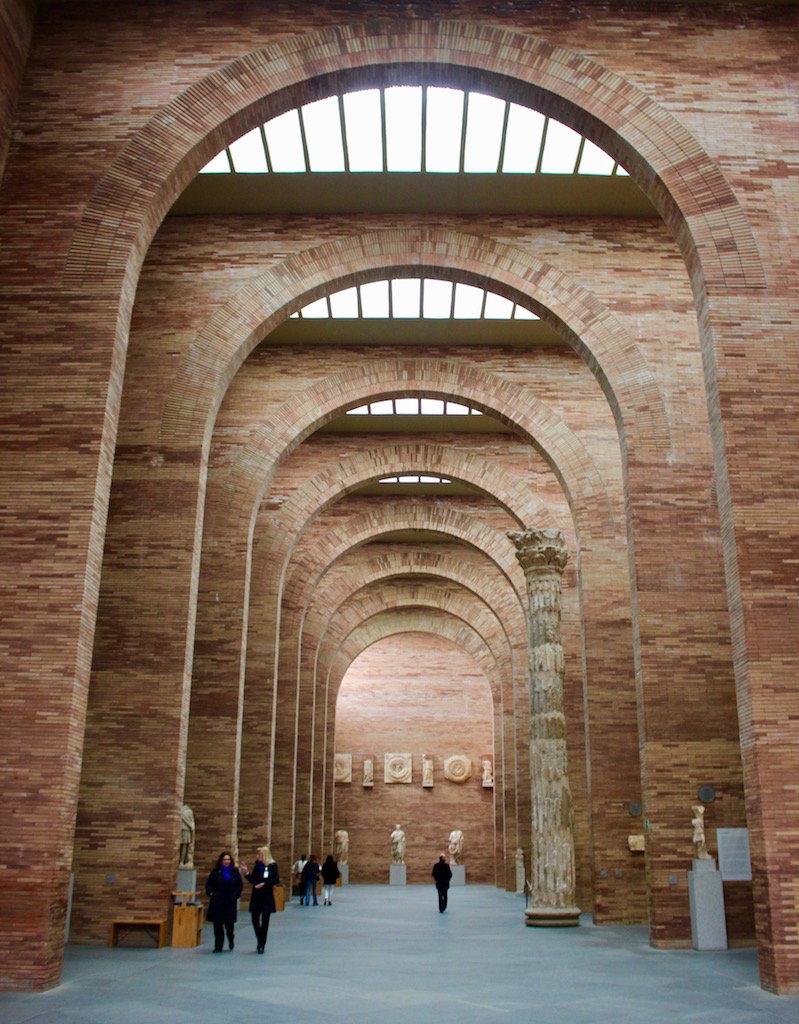
If you are visiting Mérida on a Saturday evening or a Sunday, entrance to this museum is actually free! While I visited on a Sunday and didn’t have to pay, a full priced ticket only costs €3. The museum is filled with ancient Roman art and artifacts, many of which were found in Mérida itself. I was particularly impressed with the mosaics displayed there. If you don’t know any Spanish, you may want to come equipped with a translating phone app, as most of the signs in the museum are in Spanish.
4. Acueducto de los Milagros
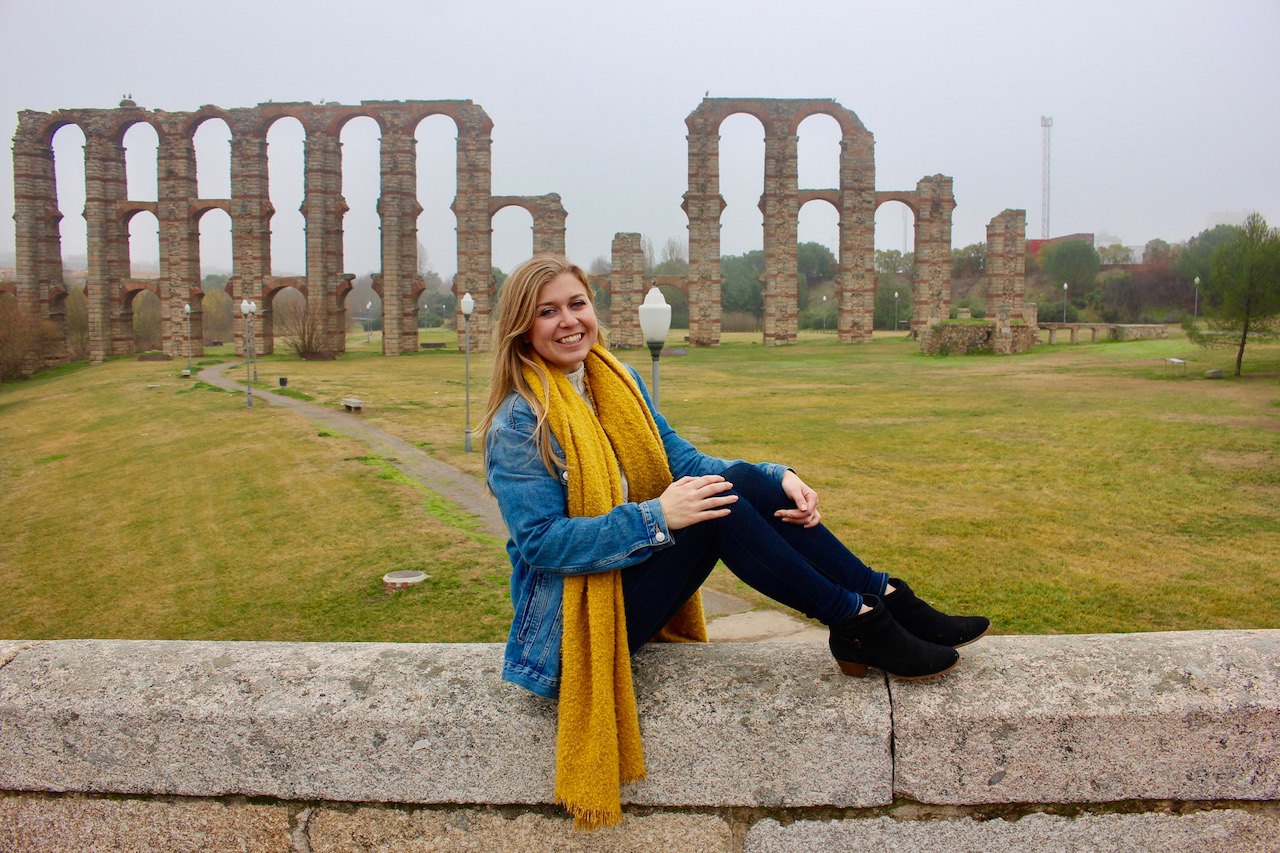
The Acueducto de los Milagros, or “Miraculous Aqueduct,” was constructed in the 1st century AD, and was designed to bring water into the city of Mérida. Today, only a portion of the original aqueduct remains, which once ran over 6 miles! Despite the fact that much of these ruins no longer stand, the three levels of arches remain quite impressive to see today. The aqueduct truly is a testament to the sophistication of Roman engineering.
5. Circo Romano

Did you know that Mérida is actually home to one of the best preserved Roman circuses in the world? This elongated oval-shaped stretch of land once was a venue for chariot and horse races as well as other important public events. While visiting this area wasn’t the most thrilling part of my visit to Mérida, the ruins are included in your combined ticket and are certainly worth walking to, if only to take a quick walk around. There is also a video available for visitors to watch, but you’ll have to know some Spanish to understand what is being said!
6. Basilica of Saint Eulalia

Also included in your combined ticket is a visit to the crypt of the Basilica of Saint Eulalia. This 13th-century basilica lies in between the aqueduct and the Roman circus, making it easy to stop by along the way from one to the other. I visited on a Sunday and quite awkwardly stumbled into the church in the middle of a service…oops! It was beautiful inside, but I was forced to retreat without getting any shots of the inside!
7. Temple of Diana
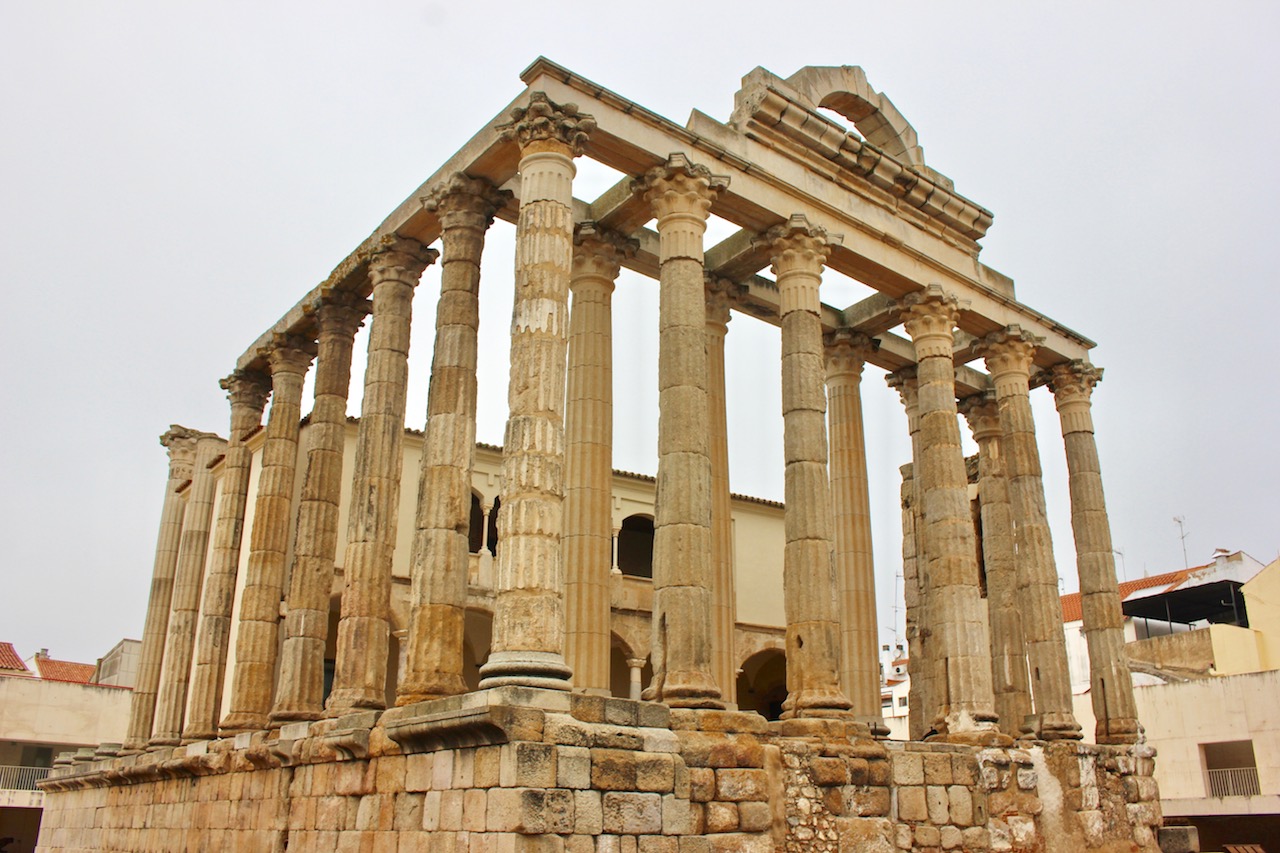
An easy stop to hit along the way to another attraction is the Temple of Diana. I actually managed to stumble upon this ruin without even searching for it! The temple’s remains are primarily from the 1st century BC, but throughout the years the temple has served many purposes. Today, the massive columns and rectangular base definitely stand out!
8. Alcazaba

To explore some of Mérida’s history post-Roman empire, you’ll want to head to the Alcazaba, a Moorish fortification built in the year 835 from existing Roman ruins. The Alcazaba was nowhere near as impressive as the one I visited in Cordoba, however, it is included in the combined ticket and offers some excellent views of another one of Mérida’s other important structures, the…
9. Puente Romana

Spanning the Guadiana River, the Puente Romana, or Roman Bridge leads visitors to the Alcazaba. This ancient bridge is actually known for being the longest Roman bridge still in existence today, and measures over 2,500 feet long! Pretty crazy to think that this impressive structure was built all the way in the 1st century, although much of it has been restored over time.
10. House of Mitreo and Columbarium
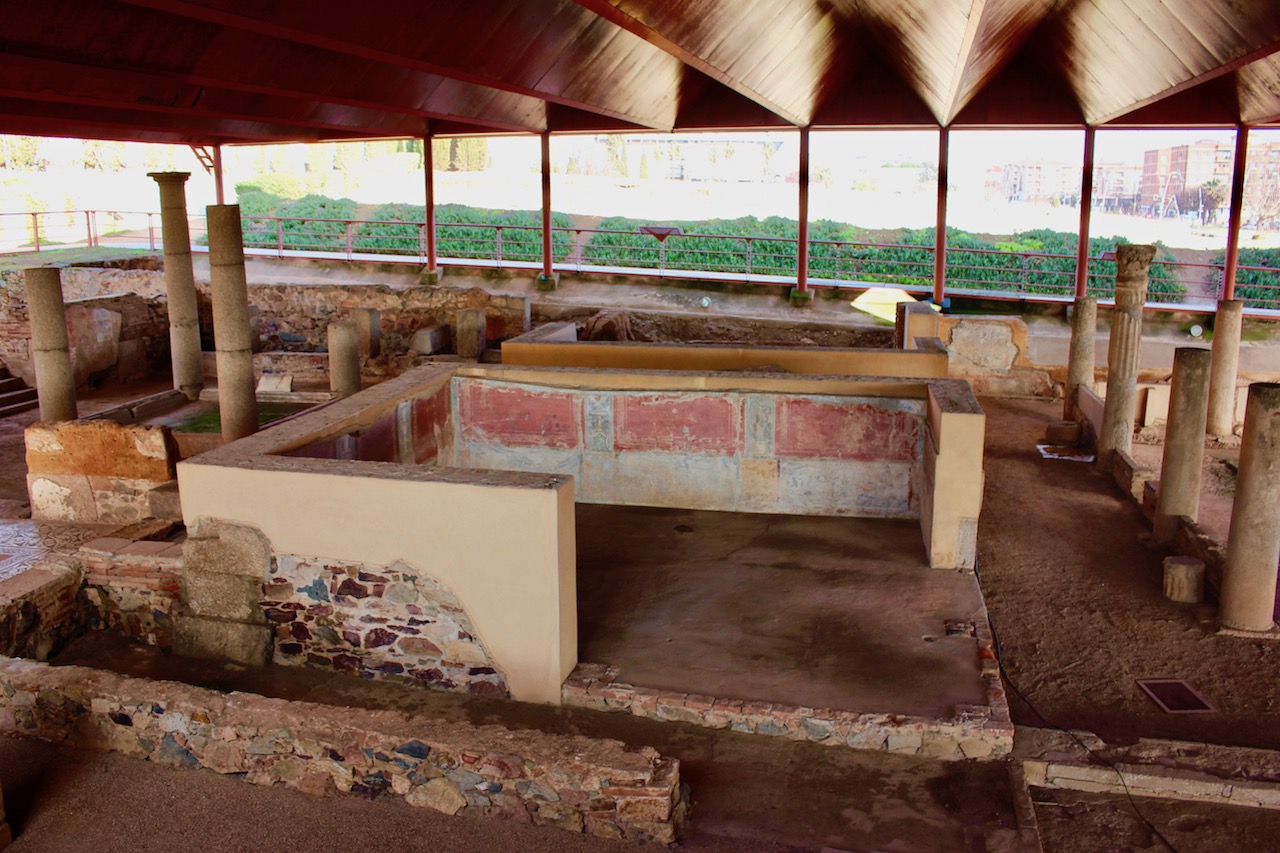
Just past the bright red Plaza del Toros, you’ll find the House of Mitreo and Columbarium, both of which are included in your combined ticket. The Casa del Mitreo contains the remains of what once was a large Roman villa which would have certainly belonged to a noble family. Today, mosaics, thermal baths, ruined walls, and even some wall paintings remain. One of my favorite places to visit in Italy is Pompeii, because I am absolutely amazed by the ancient villas which remain so well-preserved there. This site was like a little taste of Pompeii in Spain, which was a pleasant surprise!
Overall Thoughts
I have to confess, Mérida wasn’t one of my favorite day trips that I have taken in Spain. Perhaps it was the weather, perhaps it is the fact that I’ve been lucky enough to see some pretty impressive Roman ruins throughout the world. That being said, I found the theater to be truly impressive and loved how easy it was to get around the city. It was definitely a nice, low key, day trip, but I wouldn’t have wanted to stay longer than a day (unless I combined the trip with a visit to other cities within Extremadura). If you aren’t interested in Roman art and architecture or don’t have a lot of time to spend in Spain, you may want to look into checking out other cities. However, if you have lots of time in Spain (like me!) and enjoy Roman history, then you certainly won’t be disappointed by a day spent in Mérida! Hopefully you’ll have better weather than I did!
While there are a few other sites and museums that you can check out in Mérida, this list certainly covers the top places to visit within the city! So what do you think? Will Mérida be making it on your Spain itinerary? Let me know in the comments!
You might also enjoy these Spain posts:
- 15 Things You Absolutely Must Do In Seville, Spain
- Itálica Day Trip: Roman Ruins (and GOT Location!) Near Seville
- 15 Cool Things To Do In Cádiz: Spain’s Oldest City
- How To Spend 1 Day In Córdoba: Top 5 Things To Do
Pin this post for later!