
How To: Grocery Shopping in Italy
While a huge part of traveling or studying abroad is soaking up local culture and sampling as many restaurants as possible, one of the best ways to save money while studying abroad is to cook for yourself. Your first trip to an Italian supermarket may seem intimidating, so here are some of my tips to make that first trip a little easier!
Know your Store
In Italy, there are primarily three types of stores where you can purchase grocery items.
Alimentari are the smallest of these, and are located on pretty much every street in Florence. They are the perfect place to grab a water bottle (watch out for frizzante if you do not enjoy sparkling water) or a quick snack, but are usually more expensive than a grocery store and have a limited selection of dry goods and drinks.
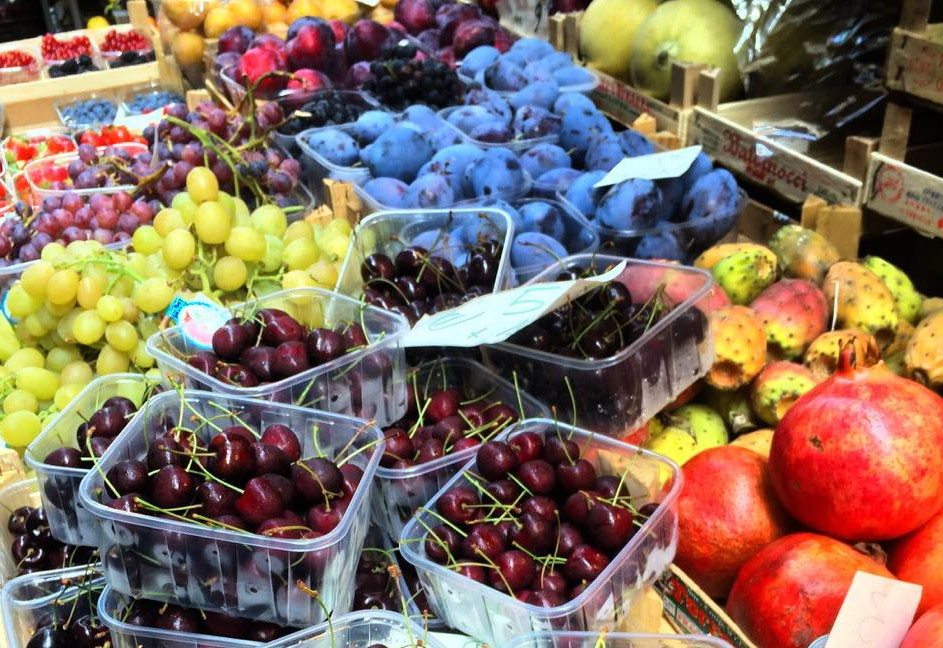
Markets are an excellent place to purchase fresh fruit and vegetables, meat, and other items you would often find in a grocery store. In Florence, there are two of these markets, Sant’Ambrogio and Mercato Centrale, but be sure to go earlier in the day as they close in the afternoon.
Grocery stores are your other option for purchasing food. In Florence the main supermarkets are called Conad and Coop. I personally shop at Conad, as there are 2 close to my apartment. While the grocery stores are similar in a lot of ways to the US, here are helpful things to know!
Store Size
Grocery stores in the United States are huge in comparison to the ones found in Italy. You will also find that not all grocery stores are created equal-some are much larger and offer a better selection than others. The good news is that smaller stores means less time spent choosing between an overwhelming selection of food and different brands!
Carts
While you can use carts in the grocery stores in Italy, I rarely do as many require you to “rent” one for a Euro that will then be returned to you after you shop. I find it easier to make more frequent trips to the store so I can avoid carrying a bunch of groceries home through the bustling streets of Florence. This will also help you keep your food fresh, as Italian foods are not packed with preservatives.
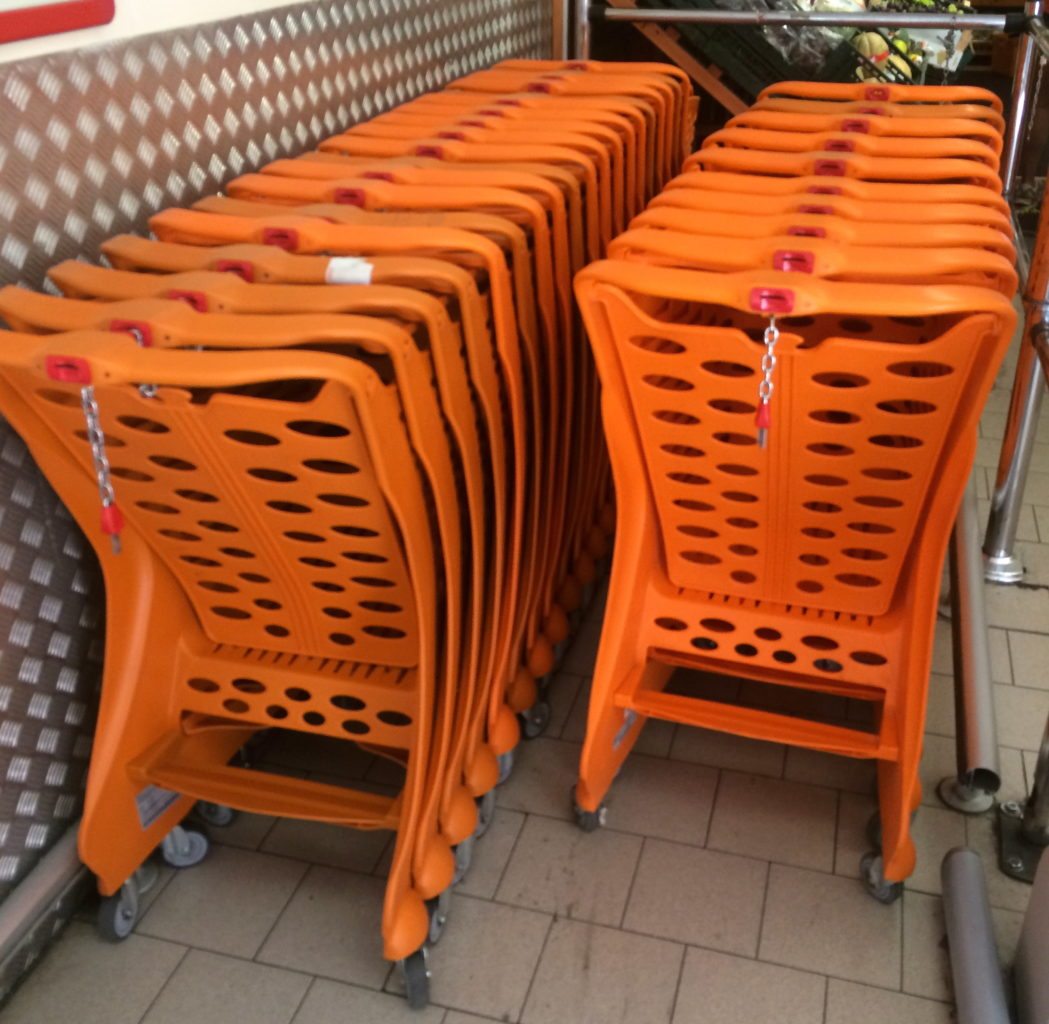
Here you can see the carts and their coin slots.
Bring Your Own Bags
In Italy, you will be charged for any bags you use at checkout. To avoid constantly paying for these and to be a green shopper, bring a backpack or a canvas bag with you. You’ll also look more like a local.
Weighing Fruits and Vegetables
When you are purchasing fruits and vegetables it is important that you follow the proper procedure for weighing your produce before you check out.
To do this:
- Put on a pair of provided gloves
- Grab a bag for your produce
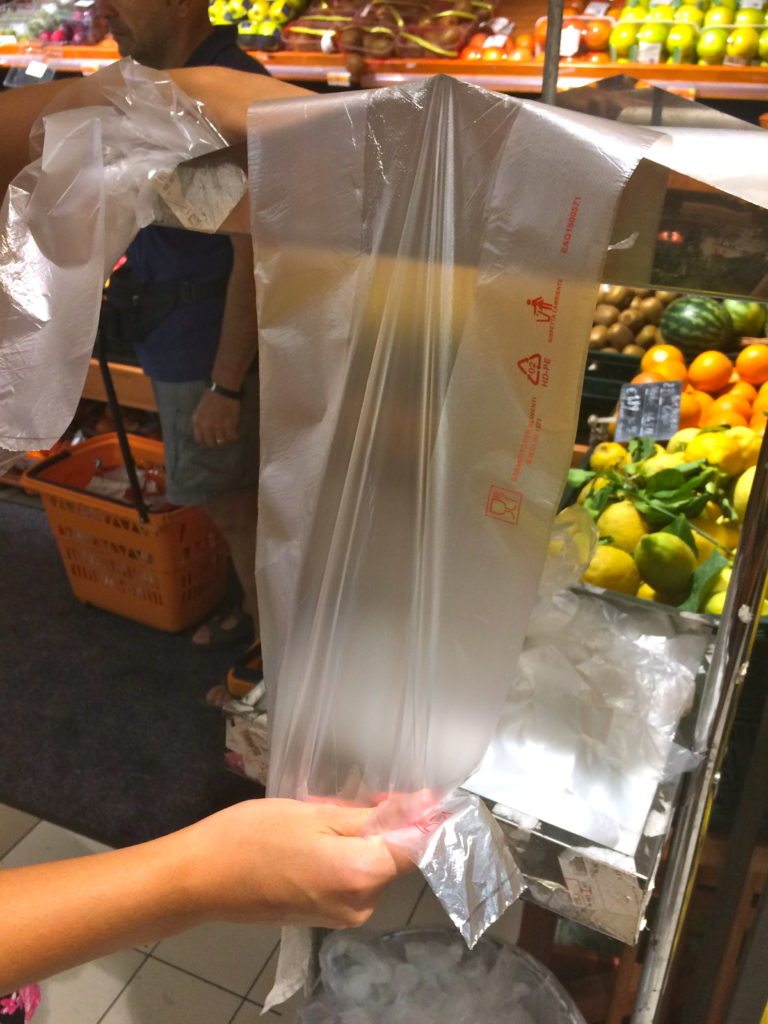
Bags can be found next to the gloves and scales.
- Make your selection
- Remember the number listed next to the produce item
- Put your selection on a scale and press the appropriate number to print a price sticker
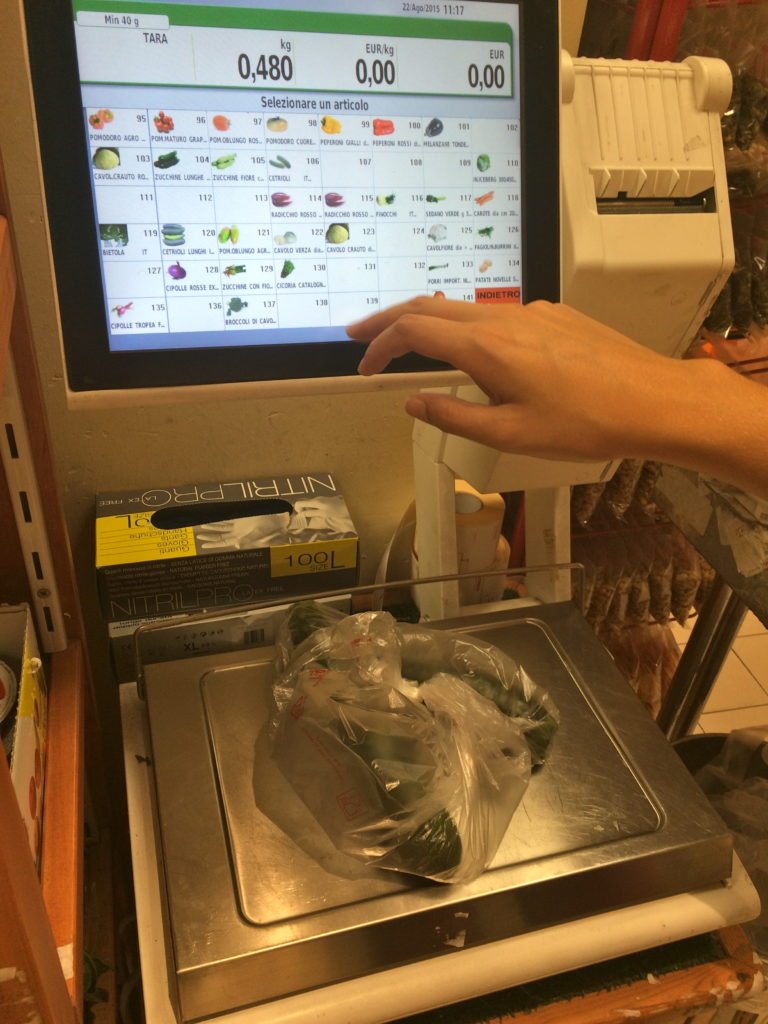
It is helpful to learn some basic Italian words for your favorite fruits and veggies, but there are also pictures to help you find your selection.
- Place sticker on bag
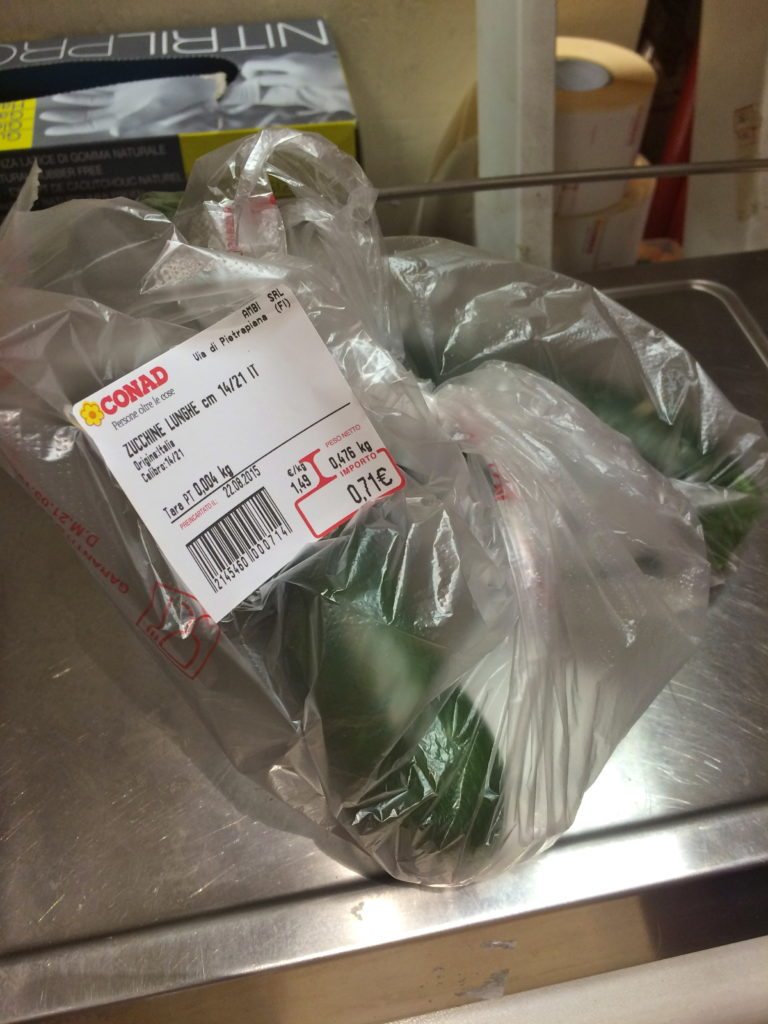
I prefer the Italian way of pricing your own produce, as you can see immediately how much you will need to pay.
- And you’re done!
Hopefully these tips will help make your first few trips to the store less intimidating, and you will be on your way to making your own delicious Italian cuisine in no time!
Where do you like prefer to shop when traveling? At local markets or in grocery stores?




We shopped at Esselungo last year. Great selection of “semi-homemade” foods that were easy to prepare in our rental apartment. I loved the fruit and veggie selection process.
Isn’t it fun? I always enjoy shopping in new and unfamiliar places. It is always an adventure!